
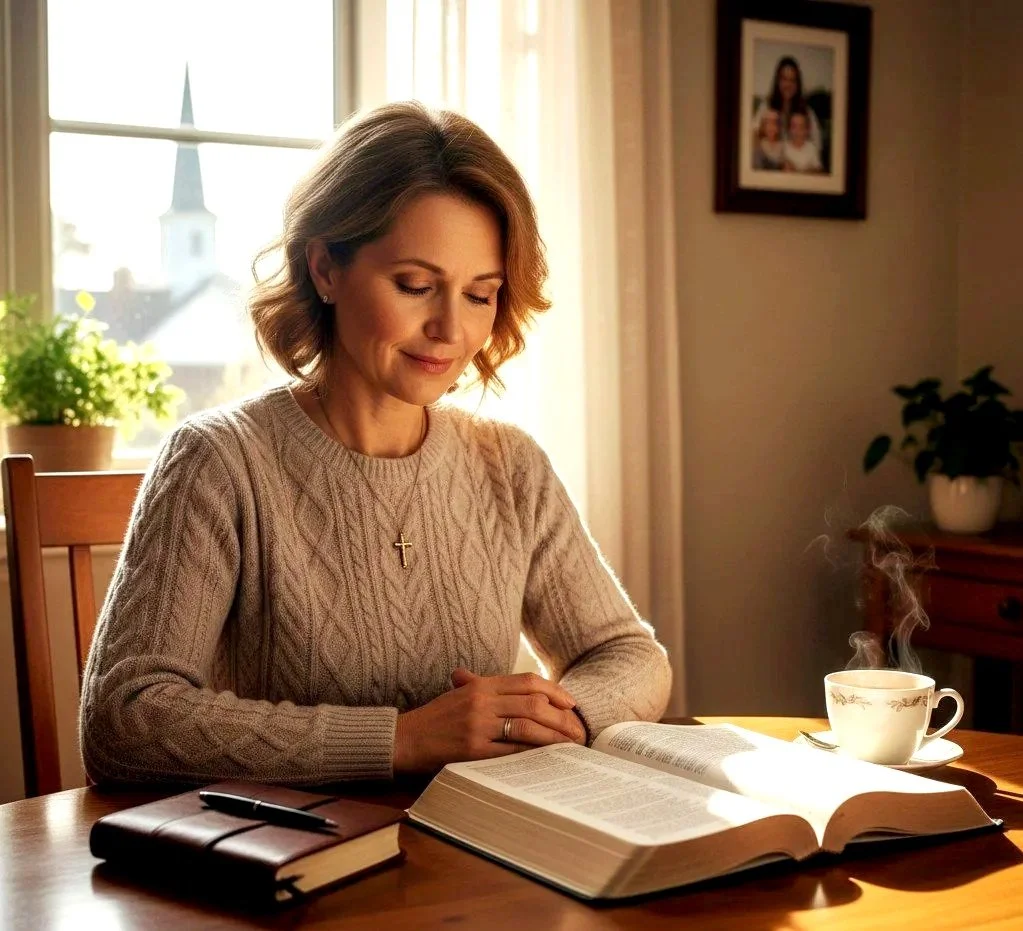
As the calendar turns and the final echoes of the Christmas season fade into the liturgical stillness of Ordinary Time, many of us find ourselves standing at a familiar threshold. We look at the year ahead with a mixture of hope and trepidation, armed with a list of resolutions intended to "fix" our lives. We resolve to pray more, eat better, wake earlier, and speak more kindly.
Yet, as any seasoned pilgrim knows, the fervor of January 1st often meets the reality of January 20th. The "New Year, New Me" energy begins to wane, and the old habits—the ones that feel comfortable like a worn-out pair of shoes—start to pull at us.
But what if we shifted our perspective? What if the goal of a New Year’s resolution isn't just a self-improvement project, but a quest for a "Sacred Routine"? In the Catholic tradition, routine is not a cage; it is a trellis upon which the vine of our soul can grow toward the sun.
The Theology of Routine
In our modern, high-speed world, "routine" is often a dirty word. We equate it with boredom, stagnation, or the "daily grind." We crave novelty, excitement, and constant change. However, if we look at the history of the Church—particularly the monastic traditions—we see a completely different understanding of repetitive action.
The Rule of St. Benedict, written in the 6th century, is essentially a manual for a holy routine. Benedict understood that the human heart is prone to wandering. By establishing the Ora et Labora (Pray and Work) cycle, he created a rhythm where every hour was accounted for, not to restrict freedom, but to create the space where peace (Pax) could actually flourish.
Routine is important because our bodies and souls are integrated. When we establish a holy routine, we are telling our physical selves that our spiritual lives are a priority. When we pray at the same time every morning, we aren't just performing a task; we are building an altar in time.
Why the New Year is a Gift for the Soul
While God is outside of time, He created us within it. He gave us the sun and the moon for seasons and signs. The secular New Year, while not a liturgical feast in itself, serves as a natural "Sabbath moment" for the year. It is a time to pause, look back with gratitude (even for the hardships), and look forward with intentionality.
The New Year is a good time to introduce routine because it offers a psychological "clean slate." In Catholic teaching, we believe in the concept of metanoia—a change of heart or a turning back toward God. A resolution, when centered on Christ, is an act of metanoia. It is saying, "I want the rhythm of my life to reflect the rhythm of the Kingdom."
The Liturgy of the Domestic Church
For those of us not living in monasteries, our routine is our "Liturgy of the Domestic Church."
St. Josemaría Escrivá often spoke about the "sanctification of ordinary work." He taught that we can find God in the most mundane routines—washing dishes, answering emails, or commuting to work. But to find Him there, we must be intentional.
A routine helps us "Ponder," much like the Blessed Mother did. Mary lived a life of profound routine in Nazareth. She drew water, prepared meals, and recited the ancient prayers of her people. It was within that routine that she pondered the mysteries of her Son. By establishing a routine of prayer, scripture reading (like our Radiating Truth studies), and reflection, we create the "quiet" necessary to hear the promptings of the Holy Spirit.
When the Resolution Fails: The Grace of Beginning Again
This is perhaps the most important part of the journey: What happens when you fail?
Statistically, most resolutions fail because we treat them as "all or nothing" contracts. We miss one morning of prayer, and we think, "Well, I've ruined it now," and we give up entirely.
The Catholic faith offers a beautiful antidote to this perfectionism: The Sacrament of Reconciliation and the Grace of Beginning Again.
One of the most famous maxims of the Desert Fathers is: "We fall down, we get up. We fall down, we get up again." In the spiritual life, the "win" is not in never falling; the "win" is in how quickly you turn back to Christ after the fall.
If you resolve to pray the Rosary every day and you miss three days, don't wait until next January to start over. Start at the next hour. God is the God of the present moment. He is not looking for a perfect record; He is looking for a heart that keeps turning back to Him.
As Scripture tells us in Lamentations 3:22-23:
"The steadfast love of the Lord never ceases; his mercies never come to an end; they are new every morning; great is your faithfulness."
Encouragement for the Journey
As you build your routine this year—perhaps incorporating bi-weekly study on Thursdays—remember that you are not doing this by your own strength.
The Catechism of the Catholic Church reminds us that "Prayer is a surge of the heart; it is a simple look turned toward heaven" (CCC 2558). Your routine is simply the framework that makes that "look toward heaven" more frequent and more natural.
Tips for a Sustainable Holy Routine:
Start Small: Don't resolve to pray for two hours if you currently pray for zero. Start with ten minutes of "Pondering" with the Sunday Gospel.
Anchor Your Routine: Attach a spiritual habit to a physical one. Pray while the coffee brews; reflect on a "Radiant Verse" while you drive.
Seek Community: This is why we gather at Pax and Ponder. We are not meant to be "islands" of faith. We are the Body of Christ, and we carry each other’s burdens.
A Final Pondering
This year, let your resolution be less about "New Year, New Me" and more about "New Year, More of Him." Let the "Radiating Truth" of Christ’s presence illuminate the corners of your schedule.
Establish your routine, hold it with discipline, but hold it with the humility to know that when you fail, His mercy is waiting to pick you up.